English grammar can feel like a maze when you use similar phrases like There Have Been, Has Been, and have been. The difference between these forms may seem like a small detail, but it is crucial for writing that remains clear and grammatically correct in real-world use. After reviewed countless emails, blog posts, and business reports, I noticed firsthand how these phrases influence communication and effectiveness.
The key to understanding the correct form is following strict rules related to singular references and plural people. These rules may appear subtle, but they help improve precision and guide you toward choosing the right form when creating accurate sentences.
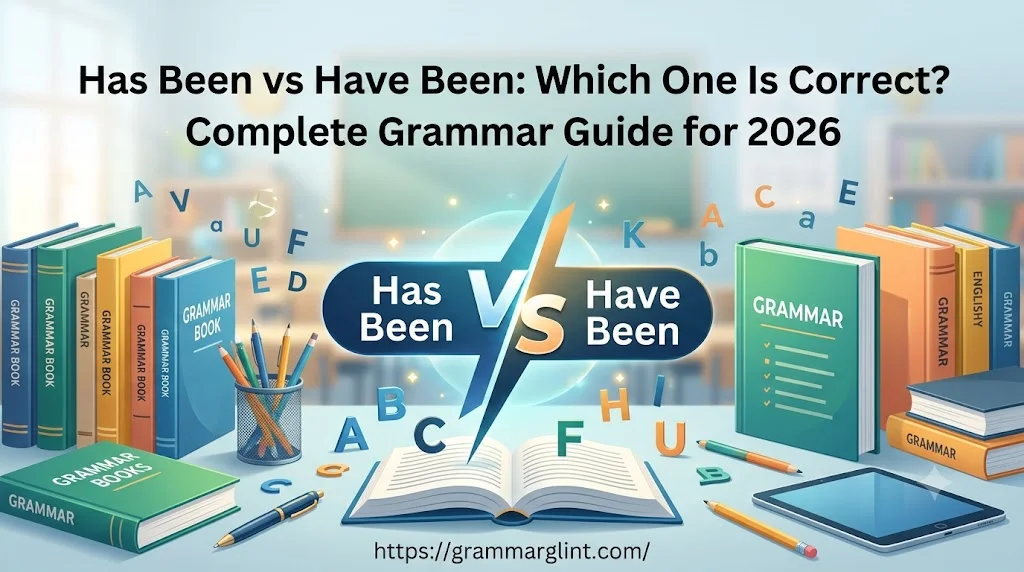
In this article, we break down the three verb phrases to explain how you can know which one is correct to use. Has been and have been are present perfect forms of the irregular verb be. Has been is used with a third person singular subject such as she, he, and it, while have been works with I, we, and they.
Had been is the past perfect form used regardless of subject. These forms are combined with present participles and other verbs to create past perfect continuous and present perfect continuous structures like had been working, has been working, and have been working. As modern English evolves, I continue working on research papers and training others by studying usage trends and updated resources while consistently applying grammar rules that enhances clarity, helps elevate every message, and builds credibility.
Quick Answer
The correct choice depends on the subject.
| Phrase | Used With | Example |
| Has been | He, she, it, singular nouns | She has been studying all night. |
| Have been | I, you, we, they, plural nouns | They have been studying all night. |
Both phrases belong to the present perfect structure and can also appear in the present perfect continuous tense.
Examples:
Has been:
He has been waiting for an hour.
Have been:
We have been waiting for an hour.
In both sentences, the waiting started in the past and continues into the present.
A quick memory trick:
H = He, She, It → Has
H = Humans in groups → Have
Although this trick is not a complete grammar rule, it can help beginners remember the basic difference.
Comparison Table
The following table explains the main differences between has been vs have been:
| Feature | Has Been | Have Been |
| Grammar role | Helping verb phrase | Helping verb phrase |
| Main use | Shows connection between past and present | Shows connection between past and present |
| Used with | Third-person singular subjects | First person, second person, and plural subjects |
| Subjects | He, she, it, Sarah, the dog, the company | I, you, we, they, students, employees |
| Present perfect example | She has been sick. | They have been sick. |
| Present perfect continuous example | He has been working. | We have been working. |
| Negative form | Has not been | Have not been |
| Question form | Has he been…? | Have they been…? |
The key difference is subject agreement.
English verbs change depending on who performs the action. This pattern appears throughout English grammar.
For example:
- The student has completed the assignment.
- The students have completed the assignments.
The subject changes from singular to plural, so the verb changes too.
What Does Has Been Mean?
Has been is a verb phrase used with singular third-person subjects. It combines the verb has with the past participle been.
It usually shows that something:
- Started in the past and continues now.
- Happened recently and affects the present.
- Describes a state or condition connected to the present.
Examples:
1. Ongoing action
She has been learning French for three years.
This means she started learning French three years ago and she is probably still learning it.
2. Current condition
The computer has been slow lately.
The computer became slow before now and the problem continues.
3. Recent activity
He has been working hard this week.
His effort happened throughout the week and matters now.
How It Works in Sentences
The structure usually looks like this:
Singular subject + has been + verb-ing
Examples:
- Maria has been writing.
- The company has been growing.
- The child has been sleeping.
The phrase has been itself does not show the complete meaning. The following word or phrase gives more information.
Compare:
- She has been tired.
- She has been running.
The first sentence describes a condition. The second describes an action.
Etymology of Has Been
To understand has been, it helps to look at the history of its individual words.
Origin of “Has”
The word has comes from the Old English verb habban, which meant “to have” or “to possess.”
Over centuries, English simplified and changed this verb into different forms:
- I have
- You have
- We have
- They have
- He/she/it has
The change from have to has developed because English historically marked differences between subjects.
Origin of “Been”
The word been comes from the Old English verb bēon, which meant “to exist” or “to be.”
Modern forms of this verb include:
- am
- is
- are
- was
- were
- been
The word been is the past participle form of be.
Together, has + been developed as part of English perfect tense structures.
The phrase allows speakers to connect an earlier event with a current situation.
What Does Have Been Mean?
Have been works similarly to has been, but it is used with different subjects.
It appears with:
- I
- You
- We
- They
- Plural nouns
Examples:
I have been studying grammar.
They have been working together.
The employees have been preparing the report.
The meaning remains connected to time. It often shows an activity or condition that began earlier and continues until now.
Common Uses
Showing Long-Term Activities
Example:
We have been living here since 2020.
The action started in 2020 and continues today.
Showing Recent Experiences
Example:
I have been to New York three times.
Here, have been to describes experience rather than an ongoing action.
Showing Current Results
Example:
You have been very helpful.
The helpful behavior happened recently and affects the current conversation.
Etymology of Have Been
The word have has one of the oldest histories in English.
It developed from Old English habban and is related to similar words in other Germanic languages.
Examples include:
- German: haben
- Dutch: hebben
The word originally expressed possession but gradually became an important grammatical helper verb.
Today, have helps create perfect tenses:
- I have finished.
- They have arrived.
- We have been waiting.
The word been maintains its connection with existence and states of being.
Together, have been helps English speakers describe experiences, ongoing situations, and actions connected to the present.
Meaning Differences
Many learners think has been and have been have different meanings. In reality, their meanings are almost identical.
The difference comes from the subject.
Compare:
She has been working from home.
They have been working from home.
Both sentences mean:
- The person or people started working from home earlier.
- The activity continues or has a connection with the present.
The only difference is who performs the action.
Changing the Subject Changes Has and Have
| Subject | Correct Phrase | Example |
| He | Has been | He has been exercising. |
| She | Has been | She has been studying. |
| It | Has been | It has been raining. |
| I | Have been | I have been practicing. |
| You | Have been | You have been improving. |
| We | Have been | We have been waiting. |
| They | Have been | They have been traveling. |
A useful comparison:
Same action + different subject = different helping verb
Example:
- The student has been reading.
- The students have been reading.
The activity stays the same. The grammar changes because the subject changes.
Grammar Differences
Understanding the grammar behind has been vs have been makes it much easier to choose the correct phrase. Both expressions work as helping verb combinations, but English requires them to match the subject.
The main rule is called subject-verb agreement.
This means the verb form must agree with who or what performs the action.
For example:
✅ The teacher has been explaining the lesson.
✅ The teachers have been explaining the lesson.
The action is identical, but the subject changes from singular to plural.
Present Perfect Structure
Both phrases commonly appear in the present perfect and present perfect continuous forms.
Present Perfect Structure:
Subject + has/have + been + adjective/noun
Examples:
- She has been busy.
- They have been successful.
- The project has been a challenge.
- We have been friends for years.
This structure describes a state or condition that started in the past and connects to the present.
Present Perfect Continuous Structure:
Subject + has/have + been + verb-ing
Examples:
- He has been working.
- They have been studying.
- I have been practicing.
This structure focuses more on an ongoing activity.
Read More: In a City or At a City: Correct Preposition Usage in English
Which One Is Correct?
Both are correct. The correct option depends entirely on the subject.
A common mistake is choosing based on the word that sounds better instead of checking the subject.
For example:
❌ The students has been learning English.
Many learners make this mistake because “students” appears close to “has been.” However, students is plural, so it requires have been.
Correct:
✅ The students have been learning English.
Another example:
❌ She have been working here since Monday.
The subject she is singular, so it needs has.
Correct:
✅ She has been working here since Monday.
Expert Tip: Find the Subject First
Before deciding between has been and have been, ask yourself:
“Who or what is doing the action?”
Follow these three steps:
- Identify the subject.
- Decide whether it is singular or plural.
- Choose has been or have been.
Example:
Sentence:
The company ______ growing quickly.
Step 1: Find the subject.
Subject = company
Step 2: Is it singular or plural?
Company = singular
Step 3: Choose the correct phrase.
✅ The company has been growing quickly.
Grammar Rules
Use Has Been With Singular Subjects
Use has been when the subject is:
- He
- She
- It
- A single person
- A single object
- A singular organization
Examples:
✅ He has been working from home.
The subject is he, so use has.
✅ Sarah has been preparing for her exam.
The subject is one person, Sarah.
✅ The phone has been charging for an hour.
The subject is one object, the phone.
✅ The company has been expanding internationally.
The subject is one organization.
Singular Words That Need Has Been
Many learners forget that names and organizations are singular.
Examples:
| Singular Subject | Correct Sentence |
| John | John has been waiting. |
| The dog | The dog has been barking. |
| My brother | My brother has been studying. |
| The website | The website has been improving. |
| The university | The university has been growing. |
Even if a company has thousands of employees, the company name itself is treated as one entity.
Use Have Been With I, You, We, They, and Plural Subjects
Use have been with:
- I
- You
- We
- They
- Multiple people
- Multiple objects
Examples:
✅ I have been learning English for years.
The subject is “I,” which always uses have.
✅ You have been very patient.
The subject is “you.”
✅ We have been waiting for the results.
The subject is “we.”
✅ They have been traveling around Europe.
The subject is “they.”
Plural Subjects That Need Have Been
| Plural Subject | Correct Sentence |
| Students | Students have been studying. |
| Teachers | Teachers have been teaching. |
| Cars | Cars have been damaged. |
| Companies | Companies have been changing. |
| Friends | Friends have been supporting me. |
A simple way to remember:
One person or thing (except I/you) → has been
More than one person or thing → have been
In Different Sentence Types
Both phrases can appear in positive sentences, negative sentences, and questions.
Positive Sentences
Positive sentences show that something happened or continues.
Has Been Examples:
- She has been working all morning.
- The weather has been changing quickly.
- My laptop has been running slowly.
Have Been Examples:
- I have been reading this book.
- They have been practicing daily.
- We have been discussing the issue.
Negative Sentences
To make negative sentences, add not after has or have.
Structure:
Subject + has/have + not + been + verb
Examples:
Has Been:
- He has not been sleeping well.
- The machine has not been working properly.
- She has not been feeling confident.
Have Been:
- They have not been responding.
- We have not been receiving updates.
- I have not been feeling comfortable.
Common contractions:
- has not → hasn’t
- have not → haven’t
Examples:
- She hasn’t been available.
- They haven’t been informed.
Question Forms
Questions usually begin with has or have.
Structure:
Has/Have + subject + been + verb?
Has Been Questions:
- Has she been studying?
- Has he been working today?
- Has the company been growing?
Have Been Questions:
- Have they been waiting?
- Have you been exercising?
- Have we been following the instructions?
In Continuous Actions
One of the most common uses of these phrases is describing ongoing actions.
The present perfect continuous tense shows:
- An action that started in the past.
- The action continues now.
- The action recently stopped but has a visible result.
Actions That Continue Until Now
Example:
She has been teaching for ten years.
This means:
- She started teaching ten years ago.
- She still teaches today.
Another example:
They have been building the house since March.
The construction started earlier and is still happening.
Using Time Expressions
These phrases often appear with time words.
Common examples:
- Since
- For
- Recently
- Lately
- All day
- All week
- How long
Since
Use since with a starting point.
Examples:
- He has been working here since 2022.
- They have been living there since June.
For
Use for with a period of time.
Examples:
- She has been studying for three hours.
- We have been waiting for thirty minutes.
Examples in Sentences
Ten Examples Using Has Been
1. He has been preparing for his interview all week.
The preparation started earlier and continues.
2. She has been learning digital marketing recently.
The learning process is connected to the present.
3. The company has been developing new products.
The development process is ongoing.
4. My brother has been working late every night.
A repeated activity continues over time.
5. The child has been sleeping peacefully.
The sleeping action is happening now or recently.
6. The weather has been unpredictable this month.
The condition started earlier and affects now.
7. Sarah has been improving her writing skills.
The improvement process continues.
8. The computer has been making strange noises.
A current problem developed earlier.
9. The team has been practicing for the competition.
The practice began before now.
10. The website has been attracting more visitors.
Growth started earlier and continues.
Ten Examples Using Have Been
1. I have been studying grammar for months.
2. You have been doing an excellent job.
3. We have been planning this event since January.
4. They have been working together for years.
5. The students have been preparing for exams.
6. My friends have been supporting my goals.
7. The employees have been improving their skills.
8. You have been asking useful questions.
9. We have been exploring different solutions.
10. The players have been training every morning.
Common Mistakes
Even advanced English learners sometimes confuse these phrases. The mistakes usually happen because people focus on the nearest noun instead of the actual subject.
Using Has With a Plural Subject
Incorrect:
❌ The employees has been working hard.
Why is it wrong?
“Employees” refers to multiple people, so it requires have.
Correct:
✅ The employees have been working hard.
Using Have With a Singular Third-Person Subject
Incorrect:
❌ My sister have been studying.
Why is it wrong?
“My sister” is one person.
Correct:
✅ My sister has been studying.
Forgetting the Subject
English sentences usually need a clear subject.
Incorrect:
❌ Has been raining all day.
Correct:
✅ It has been raining all day.
The word it acts as the subject.
Confusing Present Perfect With Simple Past
This is another common problem.
Compare:
Present Perfect:
I have been working here for five years.
Meaning:
- I started five years ago.
- I still work here.
Simple Past:
I worked here five years ago.
Meaning:
- The job happened in the past.
- It may not continue now.
The key difference:
Present perfect connects past actions with the present. Simple past only talks about completed past events.
Pronunciation Guide of Has Been vs Have Been
Although has been and have been look different in writing, many learners find them confusing when they hear native speakers use them in everyday conversations.
The reason is simple: English speakers often reduce sounds while speaking naturally. Words become shorter and smoother, especially common grammar words like has, have, and been.
Learning the pronunciation helps you understand conversations more easily and speak more naturally.
How to Pronounce Has Been
The phrase has been is usually pronounced like:
/hæz bɪn/
In normal conversation, it often sounds like:
“haz-bin”
Example:
She has been working here for years.
A native speaker may say:
She haz-bin working here for years.
The word has receives less stress than the main verb.
Correct stress pattern:
❌ SHE HAS BEEN WORKING
✅ She has been WORKING.
The important information is usually the action, not the helping verbs.
How to Pronounce Have Been
The phrase have been is pronounced:
/hæv bɪn/
In casual speech, it often sounds like:
“hav-bin”
Example:
They have been waiting outside.
Natural pronunciation:
They hav-bin waiting outside.
The word been can have different pronunciations depending on the speaker and region.
Some speakers say:
- been → bin (/bɪn/)
- been → bean (/biːn/)
Both pronunciations are accepted.
Examples:
- I have been there. → “I have bin there.”
- I have been there. → “I have been there.”
Common Pronunciation Mistakes
Pronouncing Every Word Too Strongly
Many learners say:
She HAS BEEN WORKING.
with equal stress on every word.
Native speakers usually say:
She has been WORKING.
The main verb carries more importance.
Confusing Has Been vs Have Been Sounds
Because has and have sound similar in fast speech, learners sometimes misunderstand sentences.
For example:
He has been studying.
may sound very close to:
He’s been studying.
The contraction he’s been is common in spoken English.
Regional Usage
The grammar rules for has been vs have been remain the same across major English varieties. American, British, Canadian, and Australian speakers all follow subject-verb agreement.
However, pronunciation, contractions, and speaking style may differ.
American English Usage
In American English, both phrases are extremely common in everyday speech.
Examples:
- She has been working from home.
- They have been traveling.
Americans often use contractions:
- She has been → She’s been
- They have been → They’ve been
Examples:
She’s been studying all day.
They’ve been waiting since morning.
These shortened forms sound natural in conversations.
British English Usage
British English follows the same grammar rules.
Examples:
- He has been living here for years.
- We have been waiting outside.
British speakers also commonly use contractions:
- I’ve been
- You’ve been
- He’s been
- They’ve been
One difference may appear in pronunciation, especially the word been, which some British speakers pronounce closer to bean.
Canadian English Usage
Canadian English generally follows the same patterns as American English.
Examples:
- The company has been growing quickly.
- The employees have been working hard.
Canadian speakers commonly use shortened forms in casual speech:
- I’ve been
- She’s been
- We’ve been
Australian English Usage
Australian English also follows standard English grammar rules.
Examples:
- She has been studying.
- They have been preparing.
In informal conversation, Australians often reduce sounds and use contractions.
For example:
I’ve been waiting.
sounds more natural than:
I have been waiting.
In Real-Life Communication
Understanding grammar rules is useful, but seeing how people use these phrases in real situations makes learning easier.
The phrases appear everywhere:
- Daily conversations
- Workplace communication
- Academic writing
- News reports
- Books and articles
In Daily Conversation
People often use these phrases when talking about activities, experiences, or situations.
Examples:
Talking About Work
I’ve been working on this project all morning.
Meaning:
The work started earlier and continues now.
Talking About Health
She has been feeling better recently.
Meaning:
Her condition improved over time.
Talking About Travel
They have been visiting different cities this year.
Meaning:
Their travel experience continues during the year.
Read More: Take Affect vs Take Effect: The Correct Phrase Explained
In Academic Writing
Academic writing often uses these structures to describe research, trends, and ongoing developments.
Examples:
Researchers have been studying climate change for decades.
This shows that the research started in the past and continues.
The theory has been discussed by many scholars.
This describes a continuing academic discussion.
Why These Forms Matter in Academic Writing(Has Been vs Have Been)
Using the correct phrase improves clarity.
Compare:
❌ The researchers has been analyzing the data.
✅ The researchers have been analyzing the data.
A small grammar mistake can affect how professional your writing appears.
In Professional Communication
Workplace communication often describes progress and updates.
Examples:
Project Updates
The team has been working on the new strategy.
Company Reports
The organization has been improving customer service.
Emails
We have been reviewing your request.
Using these structures helps explain progress clearly.
In Literature and Media
Writers use these phrases to create a connection between past events and current situations.
Example:
The character has been searching for answers.
This tells readers the search began earlier and remains important.
Another example:
They have been fighting for justice.
The phrase creates a feeling of an ongoing struggle.
Related Words and Commonly Confused Terms about Has Been vs Have Been
Many learners confuse has been vs have been with other similar grammar structures.
Understanding these differences prevents mistakes.
Had Been vs Has Been vs Have Been
The main difference is time.
| Phrase | Tense | Example | Meaning |
| Has been | Present perfect | She has been working. | Started in past and connects to now |
| Have been | Present perfect | They have been working. | Started in past and connects to now |
| Had been | Past perfect | She had been working. | Happened before another past event |
Example:
Has Been:
He has been studying for three hours.
He started studying earlier and may still be studying.
Had Been:
He had been studying for three hours before dinner.
The studying happened before another past event.
Has Gone vs Have Gone
These phrases are related but have a different meaning.
Has Gone
Used with singular subjects.
Example:
She has gone to the store.
Meaning:
She went there and has not returned yet.
Have Gone
Used with plural subjects or I/you.
Example:
They have gone to the store.
Meaning:
They went there and are still away.
Has Been To vs Have Been To
This structure usually talks about experiences.
Examples:
She has been to Paris.
Meaning:
She visited Paris before.
They have been to Paris.
Meaning:
They visited Paris before.
The difference is only the subject.
Is vs Are
These verbs follow the same subject agreement idea.
| Singular | Plural |
| He is happy. | They are happy. |
| The book is interesting. | The books are interesting. |
Like has and have, the verb changes according to the subject.
Was vs Were
The same pattern appears in past tense.
Examples:
Singular:
She was tired.
Plural:
They were tired.
Understanding these patterns makes has been vs have been easier.
Expert Language Insight: Why Do People Confuse?
The confusion happens because both phrases:
- Have similar meanings.
- Sound almost identical.
- Appear in similar sentence structures.
- Are used to describe time connections.
The biggest reason learners make mistakes is that they focus on the noun closest to the verb.
Example:
The group of students has been studying.
Many people choose have because they see “students.”
However, the real subject is group, which is singular.
Correct:
✅ The group has been studying.
FAQs
1. What is the difference between “has been” and “have been”?
Has been is used with singular subjects such as he, she, it, or a singular noun. Have been is used with plural subjects and the pronouns I, you, we, and they. For example, “She has been working” is correct, while “They have been working” is correct.
2. When should I use “there has been”?
Use there has been when you talk about the existence of one thing or a singular situation. For example, “There has been a mistake in the report.” The word after “been” usually refers to a singular noun.
3. When should I use “there have been”?
Use there have been when you are referring to multiple things or plural situations. For example, “There have been many changes in the company policy.” The plural noun “changes” requires “have been.”
4. Is “there has been many problems” grammatically correct?
No, “there has been many problems” is incorrect because problems is a plural noun. The correct sentence is: “There have been many problems.” The verb must agree with the noun that follows.
5. Can I use “have been” with “I”?
Yes, have been is always used with “I.” For example, “I have been studying for three hours.” You should never write “I has been studying.”
6. Can “has been” and “have been” be used for past actions?
Yes, both forms can describe actions or situations that started in the past and continue into the present. For example, “He has been living here for five years” and “They have been living here for five years.”
7. What is the easiest way to remember the difference between “has been” and “have been”?
Remember this simple rule: singular = has been, plural = have been. Also remember that “I” and “you” always use “have been,” even though “you” can refer to one person.
8. Is “there has been” more common than “there have been”?
Neither form is more correct or universally common. The choice depends on whether the noun after “been” is singular or plural. Both are widely used in everyday English.
9. What are common mistakes people make with “has been” and “have been”?
Common mistakes include using “has been” with plural nouns, using “have been” with singular nouns, and ignoring subject-verb agreement. Checking whether the subject is singular or plural can prevent most errors.
10. How can I improve my use of “has been” and “have been”?
Practice reading and writing sentences with different subjects. Pay attention to the noun or pronoun connected to the verb. Regular exposure to correct English through books, articles, and conversations will also improve your accuracy.
Conclusion
Understanding the difference between has been, have been, there has been, and there have been helps you communicate more clearly and confidently. Although these phrases look similar, they follow important grammar rules based on subject and noun agreement.
The easiest way to remember the difference is to focus on whether you are talking about one person, one thing, or multiple people and things. Use has been with singular subjects, have been with plural subjects and the pronouns I, you, we, and they, there has been for singular situations, and there have been for plural situations.

Aria Jane is a senior language writer and grammar specialist at Grammar Glint. She focuses on English grammar, spelling variations, vocabulary, and writing clarity. Through detailed research and practical examples, Aria helps readers understand language rules and avoid common mistakes. Her articles are designed to make English learning accessible for students, professionals, and everyday writers seeking reliable language guidance.